Children’s Literature MA (Online)
Imagine new worlds for young readers
100% online
24 months (part-time)
180 credits
4 starts per year
Request more information
Complete the form below for detailed programme and pricing information, and to be contacted by phone and email.
Shape the future of storytelling
- Apply By: 05/02/27
- Start: 01/03/27
The online Children’s Literature MA/PGDip/PGCert is for ambitious readers and writers who are passionate about children’s and young adult (YA) reading, storytelling, and literary creativity.
Learn from leading academics and practitioners, including author Michael Rosen, Professor of Children’s Literature at Goldsmiths. In a global children’s book market expected to grow significantly, this programme blends critical theory with creative practice, supporting aspiring writers and industry professionals as well as those seeking continuing professional development in the fields of education and literary studies. It prepares graduates to create, teach, and evaluate children’s literature with a sustained and informed commitment to diversity and representation.
As one of the only fully online master’s programmes in its field, this course offers the flexibility to gain a respected qualification while developing your critical and creative voice.
More about Children’s Literature MA
- Learn from leading children’s authors and academics, including Professor Michael Rosen, and gain insight into how children’s literature is created, studied, taught, and shaped in contemporary culture.
- Join one of the UK’s leading universities for creativity and innovation, known for its distinctive approach to culture, storytelling, and critical thinking.
- Study a future-focused curriculum, exploring texts, visual contexts, and debates that reflect changing social, cultural, inclusive, and educational landscapes.
- Enjoy a flexible-first approach to online learning that meets the needs of working professionals.
More information about this programme
Click on each tab below to learn additional details regarding the programme requirements and features.
Curriculum
Shape the future of inclusive children’s literature
180 total credits
8 courses plus dissertation
The curriculum blends academic inquiry with creative writing and critical thinking, guided by expert scholars and practitioners. Students develop advanced analytical frameworks while engaging with texts that have shaped cultural identity, imagination, and contemporary storytelling.
What you’ll learn
Literary foundations
Gain a deep understanding of the evolution of children’s literature, examining how stories impact culture and young readers over time.
Critical and creative practice
Strengthen your analytical voice through theory-led study, while exploring creative approaches to interpreting and critiquing texts.
Research and professional application
Develop practical research, curation and reflective skills that support careers in publishing, education, and more.
Entry criteria
Your path to a purpose-driven literary career
4 intakes per year
Flexible routes to entry
We welcome applicants with an intellectual curiosity, writing ability, and passion for storytelling and children’s and young adult (YA) literature. For typical entry to this programme, we require you to have either:
- A BA or BSc degree at level 2:1 (or equivalent) in literature and humanities, education and childhood studies, creative and arts or social sciences.
- A BA or BSc degree at level 2:2 or above (or equivalent) in any discipline and at least 2 years of relevant work experience.
If you do not meet standard entry criteria, we may accept applications with a lower degree and significant work experience. Alternatively, we may recommend joining the PGCert in the first instance. Contact us to learn more.
English language proficiency requirement
If English is not your first language, you will need to supply an up-to-date English language test certificate. We accept IELTS certificates with an overall score of 6.5, including a 6.5 in writing and no less than 6.0 in any band. Alternative test certificates are also accepted, and exemptions can be made. Please contact us to find out more.
Apply today
Review our admissions pages for more information on language criteria and how to apply.
AdmissionsFees & funding
Tuition fee details
The estimated total cost of this programme is £12,500 GBP for the full MA. You can pay in full or in instalments of £1,300 every module, and £2,100 for the dissertation (paid in two instalments over approximately 7 months). All costs are listed to help you make an informed decision.
Programme fees are reviewed annually and are subject to change each academic year. The fees listed above are for academic year 2026-27.
Fees and funding
We are excited to be offering discounts. Review our tuition and funding pages for more information.
Funding options
What can you do with an MA in Children’s Literature?
An MA in Children’s Literature offers significant career advantages by equipping you with specialist editorial knowledge, narrative expertise, and advanced analytical skills applicable across publishing, media, literacy, and cultural sectors. Graduates of the campus-based master’s commonly progress into editorial, commissioning, content, and literacy-focused roles, building careers that develop from entry-level coordination to senior creative leadership.
Impact-driven careers in children’s literature
Senior Publicist £56,339 per year1
Content Lead £67,420 per year2
“It’s been very exciting developing an MA in Children’s Literature at Goldsmiths. […] Children’s Literature is essentially a human practice, it’s part of how we initiate our children into life, but also how we begin to shape how they think about and question what they are.”
–– Michael Rosen
What you’ll learn
Develop advanced analytical, research and writing skills that prepare you to contribute meaningfully to the fields of children’s and young adult literature. Strengthen your ability to evaluate texts, shape narratives, and understand how literature impacts young people.
Programme outcomes
- Analyse texts with historical and cultural insight
- Apply critical frameworks to contemporary storytelling
- Conduct independent research and reflective practice
- Write clearly for academic, creative, and professional contexts
- Evaluate how literature shapes childhood, identity, and imagination
Meet your faculty
The faculty within the School of Mind, Body, and Society bring together creative practice, literary scholarship, and social consciousness. Comprising writers, critics, and educators, they are deeply engaged with both the artistry and the politics of children’s literature. Their shared ethos is one of critical creativity—approaching children’s texts not only as stories, but as cultural artefacts that shape ideas of childhood, identity, and society.
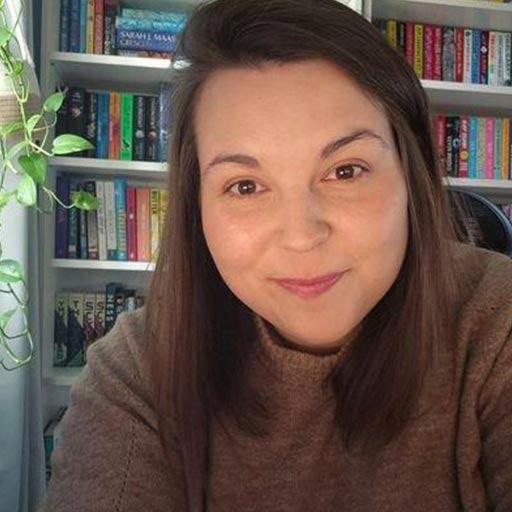
Dr Emily Corbett, Programme Convenor
Dr Emily Corbett
Dr Corbett is General Editor of The International Journal of Young Adult Literature. As Programme Convenor, she offers a strong grounding in academic and critical perspectives on children’s and young adult literature. Her work often engages with identity, readership, and contemporary publishing, providing students with analytical tools to interrogate the field’s evolving boundaries.
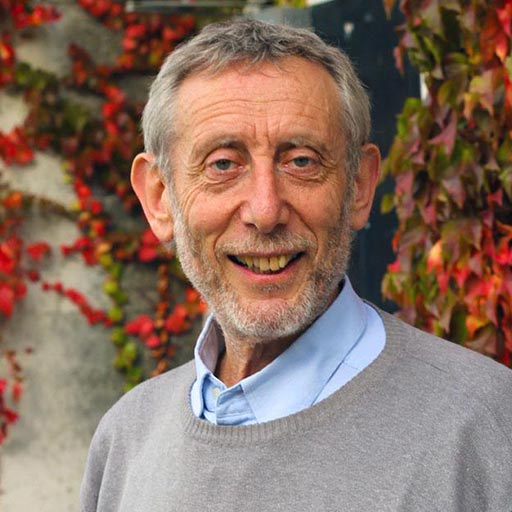
Michael Rosen, Professor, Children’s Literature
Professor Michael Rosen
Since the late 1960s, Michael Rosen has written extensively across books, articles, plays, and scripts, alongside performing poetry for audiences of all ages and broadcasting on literature-related topics across radio and television. He served as the UK Children’s Laureate from 2007 to 2009. Michael studied English at Wadham College, Oxford, before completing an MA at the University of Reading. After earning his PhD in 1997, he has taught children’s literature on MA programmes at universities in the UK and internationally.
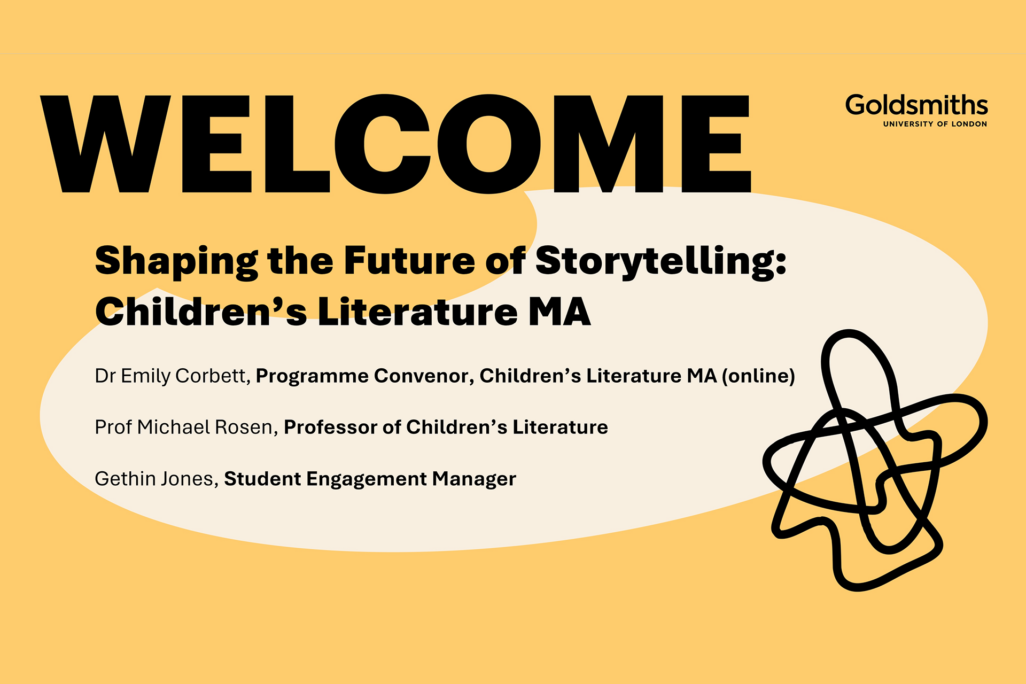
Gethin Jones: Okay, hi everyone. Yes, looks like we’ve got a lot of people coming in now. So we’re going to say hello and welcome to everybody. So 5 o’clock start. We’ll leave it for just a minute or so for anybody to join and then we’ll make a start on the session proper. My name is Gethin Jones. I’m the student engagement manager at Goldsmiths University of London Online and we will be joined by very, very special guests. Professor Michael Rosen and Dr. Emily Corbett from the Children’s Literature MA programme online. So bear with us a second and then we’ll get everything ready and we’ll make a start.
Michael Rosen: Okay.
Gethin Jones: OK, Emily and Michael, you ready?
Michael Rosen: Yep.
Emily Corbett: Yes, ready.
Gethin Jones: We’ve got voices and we’ve got video. Brilliant. Welcome. Thank you so much for joining us. Okay, I’m going to do a quick introduction and take you through some housekeeping. But just to make sure we’ve got the right session for everybody, this is Shaping the Future of Storytelling, an Introduction to the Children’s Literature MA at Goldsmiths, the online version as well.
And, you can participate in the session. So if you’d like to ask questions, you can do so in the Q&A. At the top of your screen, you should be able to see a little Q&A function and then that should pop up with a pane for you to ask your questions on the side. So post those in there. We might leave them towards the end of the session, depending on how many we get. But if there’s something that we’re talking about and a question related to that, we might do that as we go. So just to let you know that. And you can upvote the questions. So if there’s one that you’ve already thought about and it’s popped up or you liked it, you think it’s relevant, please do interact to the questions in that way. And, we’ll try and answer as many questions as we can in the live situation for both Michael and Emily. If you’ve got any questions for the process for admissions, for applications, you can get in touch with my team at the online admissions e-mail address that’s on the screen, but we’ll cover a lot of that stuff. Later, as well. OK, so… agenda for this evening, this afternoon. We’re going to try and aim for about 45 minutes. We’ll see how things go, but that’s roughly what we’ve got planned for today in terms of everyone’s time. We’ll meet with the faculty, with Michael and Emily. We’ll talk about why Goldsmiths. We’ll talk about the programme itself. The highlights, I’m absolutely certain, is going to be the taster lecture element from Michael. No pressure, Michael. I think that’s what everybody’s here for. And then we’ll talk about what you’ll study, the online learning environment for the Goldsmiths online programmes. And then how to apply and then we’ll have some Q&A at the end as well. Okay, right. I am going to pass you on now to Dr. Emily Corbett.
Emily Corbett: Thank you and hello everyone. It’s so lovely to be here. I’ve just been having a look through the names of people in attendance and I recognise quite a few of you who I’ve either been emailing with or have read your applications. So it’s great to be here and to meet you all. My name is Emily and I am the head of the Children’s Literature MA programme, both the online one that we’re going to be talking about today, but also the on-campus one as well. Outside of my teaching responsibilities, I am a specialist researcher of children’s and young adult literature. Particularly my research interests are on British young adult literature and the paratextual materials of children’s books. So paratextual materials are things like book covers, blurbs, titles, through to author’s notes and other kind of extra materials that go around a book. I’m quite interested in what they can tell us about who the book was intended for or what the book was sort of supposed to be achieving. I also am very lucky to serve as the general editor for the International Journal of Young Adult Literature. So that means that in addition to reading fabulous work from students, I also have the privilege of reading.
Michael Rosen: Yeah.
Emily Corbett: New articles that are submitted and supporting scholars to develop those for publication. And then I co-lead the children’s and YA literature strand of the Centre for Language, Culture and Learning here at Goldsmiths. So I have such a wonderful job, but the online programme is a new but absolutely wonderful part of it. And I’m so excited to talk to you more about that today. And I’ll hand over to Michael to introduce himself.
Michael Rosen: Hi there. I hope you can see and hear me. I don’t look anything like that anymore, but that’s another matter. So I’m Michael, Michael Rosen. I seem to be identified here with two books. “We’re Going on a Bear Hunt” and “Chocolate Cake”, which I was performing this morning to about 800 children in Ally Pally, Alexandra Palace. So I’m a performer, I’m a writer. I write poems and stories, write some non-fiction for adults. And I’ve been teaching children’s literature, one way or another, on university campuses since about, I was just trying to work it out, since about 1993. I started off at what was the University of North London that became London Met. I taught for a bit at Birkbeck at the London Institute of Education, as it used to be, and is now a part or part of the University College, and then came to Goldsmiths in 2014, the end of 2013 into 2014, when we devised the MA in Children’s Literature here. There’s some other nice things being said about me there, which you can read, so I won’t repeat them. All right, lovely. Thanks very much.
Emily Corbett: Thanks, Michael. It’s one of the things I love most about Michael is that he is absolutely a national treasure, but also the most modest person you will ever meet in the world. So it’s great to be able to work together on this programme. So what does it mean to study at Goldsmiths online? I don’t know who’s already studied at Goldsmiths or who’s already familiar with the university, but we have quite a reputation for being creative and for thinking critically, for nurturing critical thinkers who are asking the kind of tough questions about how to do things differently, you know, how to build a better world, how to change the future. And you would become part of that community where we’re asking these sorts of questions. We’re based in London, which for those of you particularly who are international applicants, it’s somewhat of a global hub of children’s literature and publishing. A lot of our publishing houses in the UK are based in London and we have a long history of authors being based in London. But we also benefit from quite a global community of learners. We’ve got students from around the world, both on our on-campus programme and also already amongst our online applicants. We’re one of the few children’s lit programmes that runs in the UK, and we’re particularly known for bringing together lots of different aspects of the field. Meaning that we’re just as good for those of you who work in publishing as those who work in teaching, you know, for those who are coming because you have a particular interest in children’s books, maybe because you want to learn how to connect more with your children or your grandchildren, for example. So our online programmes are really an invitation to join this community of like-minded students from all different walks of life. You’ll benefit from the same standard of teaching as the on-campus programme and also from the same faculty. Michael and I teach most of the on-campus programme and we also teach the majority of the online programme. The big difference really that sets it apart is that studying with us online offers a level of flexibility that we’re not able to offer on campus. And that’s both in terms of where you’re studying, whether that’s within or beyond the UK, but also when you’re doing your work. Because so many of our students are working full time or have caring responsibilities, they might have other things in their life that prevent them from keeping a more regular schedule. So an online programme will allow you to join in when you can and fit it around your working life or your personal life. We’ll talk a little bit more about that later. But I think the kind of thing to take away from this is that we’re here to offer a little bit of a platform for discovery, whether that be self-discovery or discovery of different ways of thinking. But we’re doing all of this with a huge prioritisation of accessibility so that we can meet you where you are. Yeah. Next slide, please, Gethin. Thank you. Oh, yes, so the numbers speak for themselves on here. But I will just say that I’ve had the privilege of working at Goldsmiths and the children’s lit programme for four years now. And like I mentioned in my intro, I oversee both this online programme and also the on campus programme. I also have the privilege of supervising a number of PhD students who are studying various projects on children’s literature. But I thought it’d be lovely, considering that Michael has been here since the beginning, for you, Michael, just to tell everybody a little bit about the history of children’s literature at Goldsmiths.
Michael Rosen: Yeah, okay, so the MA that I was teaching at Birkbeck, ground to a standstill, and I was bleating about it online. And basically I was headhunted, which was really rather lovely and flattering. So I arrived at Goldsmiths, partly because it was already partly being taught within the education department. So children’s literature courses can find themselves in various places around the world in different departments, sometimes in an English department, sometimes in children’s studies. And in Goldsmiths, it was within education. There was already a module or two in place. And so I came in and then along with Dr. Margaret Pitfield, Maggie Pitfield, was a wonderful expert in drama teaching, particularly in the middle school years. We sat down and devised an MA in children’s literature at Goldsmiths in 2013 to 14. And it included some elements from previous MAs that I’d worked on and also brand new elements. And so we thought that to fit in with other MAs around the country because you’re supposed to work with comparability as it’s called. We had a theoretical aspect, a historical aspect. There was a creative aspect which was already in place. We brought in the English department. So we brought in a creative aspect if people wanted to study how to write children’s books. And then also possibly a unique element, certainly within the UK, possibly in the world as well, what we call children’s literature in action. That’s to say participants on this course, who could be teachers, librarians, youth workers or any other interested party, to take works of children’s literature books to a group of children or young people and study how those children or young people responded to those books. So we were trying to create a situation to reverse the old model of the critic looking at a children’s book and trying to, if you like, anticipate how children feel about books, but trying to find out actually more closely and more attentively how children themselves feel, respond, react across a period of a module, which is traditionally about 10 weeks. And so we set up our Children’s Literature in Action module, which has been going ever since then. We’ve actually published a book of some of those. So, you can see those online for free. We’ve put it up there online, Children’s Literature in Action, from at least about 17 or 18 of our former students, and we’ll probably produce another one soon as well. So that was a unique element that we brought in. And then as the course has developed, it’s developed pathways with an illustration pathway, which is terribly important, and also publishing. So it has several pathways, the one on campus, and that’s where we’re at. So it first came into being in 2014 and I’ve been teaching on it ever since.
Emily Corbett: Thanks Michael. So I think we can see that we’re combining here not only the sort of power of Goldsmiths and the reputation that Goldsmiths has, but also a particular reputation that Michael and colleagues and most recently me joining the team have built over the years for taking children’s literature seriously as a subject of inquiry and taking young people’s voices seriously as well. Next slide, please. And this sort of fundamentally underpins the ethos of the course. You know, why does children’s literature matter? I think we all recognise that postgraduate study is a lot of work, it’s expensive. So you have to understand why you’re doing it. You know, what are you going to get from it? Why does it matter? How is it going to enrich your life? And for a lot of people, that will be a professional reason, but not for everybody. You know, for many of our students, it’s about really taking the time to give attention to something that is so fundamentally part of all of us as human beings. I think children’s literature as a field has long been stigmatised as lesser than, you know, less complicated or less important or less worthy of study. But just quite frankly, this could not be more wrong. You know, children’s literature is fundamentally important to our society. It quite literally helps us to raise our young people. But it’s also a masterclass in form, you know, in technique. It’s worthy of its own theories and its own approaches. And it’s also one of the most dynamic forms of publishing. We’ve got new trends, we’ve got new form genres, digital innovations, all of those sort of things have a little bit of a test case space in children’s literature quite often. And it’s also a brilliant way of seeing how stories circulate around the world, because I think children’s books come with such a sort of warmth and reputation for communicating the big ideas to young people in forms that will enable them to think and to develop their own perspectives. And really, well, it’s just jolly old fun to study. I mean, who doesn’t want to spend their time immersed in the world of children’s books? Michael and I, you know, Michael more than any, have made a career of doing it. And this really is an invitation to come along with us and to think about children’s literature as something that really deserves our energy. You know, is there anything you want to add, Michael, before we hand over to you for a bit of a history of children’s literature?
Michael Rosen: Just to say, you can always approach children’s literature from a variety of angles. That’s one of the interesting things about it. You can treat it as a piece of literature very much in the way that you might do it almost at GCSE, A level, degree level, thinking of texts. But you can also look at it in a very sociological way, because after all, we’re very interested in child behaviour, child development we talk about, and how children’s literature fits within that. And then as I’ll be talking about in just a moment, the borderlines of what is literature, we can always debate those as well. So that’s a very interesting area. And then also, at the core of children’s literature, all sorts of very interesting ideological questions about who’s it for and why are we doing it? And are we controlling children, containing them? Are we making them into, are we creative, do we have a model in our mind as to what we’re doing? Or are we trying to pretend that we’re not and setting them free? All these debates have been going on in children’s literature for many, many years, if not hundreds of years. So all that, for me, I find very interesting, and it is a form of popular culture. You know, we study, after all, we study film, we study TV, and children’s literature sells millions and millions of books worldwide. You only have to think of something like…
Dave Pilkey, Dog Man, his latest series, or Captain Underpants. I mean, these sell millions and millions of books. You can think of many other examples, Harry Potter, obviously. So, you know, these are worth a study on their own because of their place in popular culture.
Emily Corbett: Thanks, Michael. Right, I shall disappear from the screen then and hand over to Michael for a little bit of a taster lecture, just to sort of situate this for everybody. Quite a lot of our content, and I’ll go into this in more detail, but quite a lot of our content is propositions for you to have a think about. And we are incredibly lucky that Michael has distilled his wisdom into a series of recorded lectures that you’ll be able to listen to and re-listen to over your time with us. And he’s going to give us a little bit of a taster now. So I will hand over to Michael.
Michael Rosen: Okay, so there in that phrase, the history of children’s literature, it immediately poses several problems as to kind of which end of the telescope we start. So I mentioned there, for example, Dave Pilkey, Harry Potter, obviously J.K. Rowling there. You can start at this end and work backwards. And some people find that the most attractive way, to be honest, and look at the diversity of children’s literature, whether worldwide or focused on the UK or UK America or Anglophone world, however people want to look at it and look across and then go back wondering about the origins of these different forms that we’ve got. So if you just take, for example, Harry Potter, those Harry Potter books combine two elements, two strong elements, the one of the school story, but also the other of the fantasy book, the fantasy book of witches and dragons and all that. And not many that has not really ever happened before. So was Harry Potter the first book of its kind? Well, not quite. And we could tease that out and then you could go back. But when did, well, who wrote the first school story? Now, that’s an interesting thought. When was it? And you can then tease that out. And then who wrote the first stories for children about witches? Why did witches, you know, after all, these, this was a form of persecution in the 17th century in America. So how come witches suddenly became funny or strange or interesting for children? So as I say, you can study history of children’s literature from this end backwards, or you can go back to the beginning and study it forward. So I’m going to give a little idea of that. But before I do that, we’ve got that little phrase there, children’s literature. We just say it, we keep saying it, children’s literature, children’s books, as if it’s not problematic, you’ll often come across that word, not problematic, but the moment you poke it, you find that it is a bit problematic. So how do we define it? What are its edges? Well, to start off with, you know, there’s one very simple thing we say, children’s literature is literature written for children. There we go, we’ve solved it. And then you go, well, hang on a minute. You know, right from the very beginning that Daniel Defoe, Robinson Crusoe, you may know the silly little rhyme that goes, Daniel Defoe lived a long time ago. He had nothing to do so. He wrote Robinson Crusoe. Yeah, there we are. Nice little funny, Clerihew as it’s called. So there was this book that was written for adults, Robinson Crusoe. They’re all adults in the book and it’s got a very interesting and not very savoury colonial origins to it, for those of you who know it. But very quickly it got absorbed into children’s literature. In other words, versions of it. Very, very soon, within a decade, as I remember rightly, there were versions of it produced for children to read.
So wait a minute, now we’ve got our first problem. So were those children’s versions of Daniel Defoe’s Robinson Crusoe, were they children’s literature? So suddenly we have a problem, and you can multiply that problem many times over as you go through the world of children’s books and children’s literature. Particularly in poetry, the way in which poems written for adults are incorporated into anthologies for children, no matter how young or old and so on. So, then the other problem with that children’s literature phrase there that seems so nice and easy is the word literature. What is literature? Well, the old and simple version of that was to say, well, poetry, plays and fiction or novels or stories. There we are, we’ve solved that. And then suddenly you find, oh, no, hang on a minute. So one of our students on the Children’s Literature in Action course has been studying a lovely dramatization, or we might call it a docudrama type book, of the climbing of Mount Everest by Sherpa Ten Singh, as he was known in my day. I can remember the climbing of Mount Everest, 1953, didn’t do it myself. I was 7 at the time. Mount Everest with an Edmund Hillary, Sir Edmund Hillary. It’s a lovely dramatisation of the book, not as a play, but as a dramatised telling. So if you pick up that book, it’s obviously for children, but is it literature? Well, yes and no. Do we need to get hung up about it? Do we need to have, do we need to think of literature as a kind of genre of writing that is separate from memoir, documentary, non-fiction, or can we just have nice, blurred edges to it? So these are some of the kinds of ways in which on a course like this we take phrases that are sort of seemingly unproblematic and then we disturb them and provoke questions about them and wonder what’s in and what’s out and how it came about. So the question we often ask about children’s issues, well, when did it all start? And one of the ways in which we can look at that is to say that obviously children were entertained with stories, even if they weren’t specifically for them. So most of you listening, I guess, are familiar with Aesop’s fables, as they’re called. Aesop is a partly mythological figure from ancient Greece. And down through the centuries since ancient Greek times, various people have produced versions of Aesop’s fables, sometimes illustrated, sometimes very simplified, sometimes with the morals, sometimes without. Well, it’s quite interesting that in the history of the printing press, in this country, and Emily was mentioning how children’s literature can sometimes be a pioneering area of literature as a whole. Well, one of the first books produced by William Caxton, the first printer, a real printer in this country, in England, in Britain as we call it now, was William Caxton. And one of his first books was Aesop’s Fables, 1484. You can look at any of these titles, by the way. You can these days look at them online. So if you put in Caxton and Aesop’s Fables, you can see. So instead of having to go to obscure libraries and not being able to find them, these days you can go to the Internet Archive or just put it in, or Gutenberg, all right, and find them. So if you just put that in or go to Google Images, you can see that the wood cuts. So it’s an illustrated story, very attractive to children of that time. And then by the time you get to the 17th century, those of you who know French will know that there was this guy called Perrault who collected together European stories, what we now call fairy stories and folk stories. Which he called Tales of Mother Goose, Comte de Merlois, and he collected those towards the end of the 17th century. So you have that idea of popular literature appearing and not directly for children. It would be for combined audiences. Directly for children, where we start with religious in Europe, we start with religious literature, very specifically didactic with a very Christian intent. And believe it or not, you can start here in around the year 1000. So not a name familiar within the world of children’s literature is a man by the name of Aelfric. All right. And he wrote colloquies. He was trying to teach Latin to people who spoke what some people call Anglo-Saxon. We call it Old English. And they’re actually quite jolly. They’re little dialogues, imaginary dialogues between the teacher and the novice who’s come to become a monk in a monastery. So when you go around derelict monasteries, for example, they’re all over the British Isles, you can see them, because a man called Henry VIII, who you may have heard of, destroyed most of them. Well, there was Aelfric in several of these and his manuscripts, teaching young people how to learn Latin with these jolly little dialogues. All right, but again, you say, well, that’s not really literature. Okay, so where do we find literature beginning? Well, you may have heard of the Puritans. Those of you who know Twelfth Night by William Shakespeare will know there’s a character in there called Malvolio, and Shakespeare is basically taking the mickey out of Malvolio, who is somebody who’s very censorious and complaining about this or that, but he’s a hypocrite because really he’s rather sexually attracted to the lady of the house and so they played tricks on him. Well, Puritans at the time, whether they were hypocrites or not, were also very, very interested in providing stories for children that showed them that, well, if you like, that Christianity was the right way, but in particular baptism. Not that children baptised themselves as babies then or even now, but they produced book. So famously, there’s one by a man called Janeway, which a rather extraordinary story of the terrible fate that you would meet if you weren’t baptised. And apparently this was a very popular book in the mid to late 17th century, A Token for Children by James Janeway. Again, you can look this up. And there are these horrific stories of what would happen to you if you hadn’t been baptised. A little bit like kind of modern horror stories for children, but in this case with a sort of biblical and Christian aspect to it. So some of you may remember those horror stories that produced by L. What was the middle initial? L.F. Stein? L.L. Stein? I’ve forgot anyway, Goosebumps. So these are the kind of goosebumps of the 17th century. Very, very attractive in their own way. And slightly more attractive, John Bunyan, who you may have heard of, who wrote A Pilgrim’s Progress, also an adult book incorporated into children’s literature. He wrote a poetry book called A Book for Boys and Girls. Couldn’t be more explicit than that. Came out in 1686. And the little poems about things that boys and girls do, followed by a little moral verse, which I suspect boys and girls didn’t read that bit, and instead enjoyed the bits about like a boy chasing a butterfly or watching a snail and that sort of thing. And also very famous from the 17th century, from what was then Bohemia, then became Czechoslovakia and is now called the Czech Republic, or Czechia, I think it’s now called. In Prague, a man by the name of Jan Kamensky, Latinized into Comenius, produced a book which is some way regarded as really one of the first children’s books directly at children with pictures for children.
We might look at it now and think it’s rather a dull textbook just for teaching Latin, but actually was based on a core idea. And you notice it was actually called Orbis Picto Sensualum, in other words to do with the senses. And what Kamensky said was that what should come before understanding are the senses. The reason why I’m slowing down on that is that is a moment in history of humankind where people said, look, in order to understand things, rather than just teaching them in theory, what we need to do is perceive them. Sadly, the present curriculum as it is taught in English schools, has forgotten this. So, you know, I can remember my son coming home from school learning about electrolysis, and he had never touched a piece of rock or a piece of ore or done any electrolysis. He was just learning it off the page. So there was dear old Comenius in 1658 saying, sense comes before understanding. And here was my son in the 21st century doing understanding, not only before sense, but actually without any sense. Sense in the sense of touch and feel and taste, the senses, yes? So there was a big breakthrough there. But the key breakthrough for some of us is the 18th century, and in the 18th century you had and a very famous book for me at any rate, which is called Tommy Thumb’s Pretty Songbook. And you think, why am I making a fuss about that? Because that is the world’s first nursery rhyme book. So without any form of didacticism at all, we find in there all sorts of rhymes that, you know, will be familiar to you. And the first time in a book, Baa Baa Black Sheep, I made the note here, Oranges and Lemons, London Bridge is falling down, Sing a Song of Sixpence. Again, you can look these up. Tommy Thumb’s Pretty Songbook, 1744. And very interestingly, in the back, what is called an advertisement. And you can see this, you look it up on Google Images. The child’s plaything I recommend for cheating children into learning without any beating and it’s nominally signed by N Lovechild, Nurse Lovechild. So suddenly here is a historic moment where the child has become the centre. We have the child at the child centred learning and instead of beating the child we’re going to cheat the child into learning. I’ll say the rhyme once more. The child’s plaything, in other words this book, I recommend for cheating children into learning without any beating. I Nurse Lovechild, N Lovechild as it says. And so you have this moment and alongside it another little book called A Little Pretty Book intended for the amusement of Little Master Tommy and Pretty Miss Polly. So 1744 was a kind of breakthrough moment in children’s books. And then five years later, the first fiction for children, the first novel for children comes out. Those of you who’ve seen the film Tom Jones, you may have seen that with Albert Finney and one or two others. That was by Henry Fielding. And this was Sarah Fielding, who was his sister, as I remember. And she wrote a book called The Governess, or The Little Female Academy. And that is the first children’s novel. At least that’s one way of saying that. So here was a breakthrough moment in the 18th century. I could go on. So at the same time as this, you had street literature, which is the people quite often overlook. So these were vendors in the street, flogging stories, ballads, and so on. So this was popular literacy, telling stories, nursery rhymes, ballads. If you have seen the play by Shakespeare, As You Like It, there’s somebody called Autolica selling ballads selling them to Phoebe and the Clown called Touchstone. And you can get an image of that right from the 16th century. People selling street literature, which runs alongside. And that is the origin of our comics industry, running all the way through, if you like, to Dave Pilkey, there am I mentioning him again, Dog Man and Captain Underpants. That idea of the popular, quite earthy story with lots of cartoons and jokes, they owe their origins to street literature, if you like. And then by the time we come to the 19th century, pretty well most of the genres are laid down in the 19th century. So you have the famous fairy tale collection of all. The Brothers Grimm, Kinder und Haus Mechen in Germany. In German that means children’s and household tales, which to start off with the Grimms didn’t think was for children. But then they peeked around and noticed some other books going on, particularly one from this country, and thought, oh, well, actually we’ll start publishing these for children. And they produced children’s editions. Changed the stories after they’d collected them for very interesting ideological reasons. And so you had them starting with in 1812, going through right the way through for about another 50 years or so, changing and adapting and growing those stories. And then you have the growth of fantasy literature, which we often think is almost unique to children’s books. One of the first examples is what’s called the Butterfly’s Ball and the Grasshopper’s Feast by William Roscoe, came out in 1802. You have Edward Lear and the Book of Nonsense, 1846. You’ve got the King of Golden River by William, by John Ruskin in 1841. And then what is really some of us think of it as almost like the crown jewel amongst children’s books, because it’s a pioneer in so many ways. Alice’s Adventures in Wonderland, which comes in 1865, which is a fantasy, it’s surreal, it’s extraordinary, it has a young person defying adulthood, defying authority. There’s lots of parody within it. There’s lots of subtext and sub sub subtext, lots of inner jokes, things that are being quoted ever since about meaning and words and logic and all the rest of it. And it’s follow up, of course, through the Looking Glass, which came six years later. And also off the back of that, or at the same time, of that street literature. We have the comic industry, which blew, absolutely expanded like crazy in the last decades of the 19th century, both here in America and France, beautiful ones in France with full colour. And so we have the tradition of comics for children, which survives to this day. In various forms, and laying down of the main genres of children’s literature that you will know, the school story, the domestic story, the one that’s based in the home, science fiction stories of course, and the picture book, which I’ve already mentioned with Orbis Pictures, but took its huge lift from someone called Randolph Caldicott. Do look him up, who devised double page spreads of picture books in a way that had never been done before. He’s the father of the picture book, if you like. And ghost stories and horror stories, of course, we have those. And the interesting genre that has emerged, which is in the expertise of Emily, who you’re talking to there, the young adult story. So those of us who had some young adults a long time ago, we were very, you know, found very curious, you know, who is this Judy Bloom? What is this stuff? Is this an adult book? Is this, she’s writing about sex. Good Lord, that must be for adults. No, it’s teenage. What? This is not possible. What’s it called? Forever? Forbidden or forever? What should we call it? Yes, and I’ve interviewed Judy a couple of times, been very lucky to interview her, and I think she’s incredible. I think she did wonderful things and for a while was a kind of agony aunt as well. So we had the beginning of all these other social media that have grown up, fan fiction. And if you ask me what was I doing yesterday, I was sitting down with a guy called MC Grammar, would you believe? Oh yes, recording Ridiculous Raps and Rhymes, a new book that we’ve just done, for audio, but at the same time he was recording it on his phone to put on Insta. And at the same time, we’ve then got to go next week while he then lays, I think you say, lays down beats, but you know, I am 80, so don’t laugh at me. All right. So we’re going to be doing that. And so here’s a book, I haven’t actually got a copy of it here, but a book, but of course, it’s actually going to be a multimedia intermediate object. In other words, it’s got various identities. And so in a way, children’s literature is expanding into the digital. Is it competing? Is the digital competing with the book? Or are there these interesting hybrids that are emerging like this book is that I’m just talking about. There we go. I will stop now. I hope you’ve found that interesting.
Emily Corbett: Thanks so much, Michael. I learned something from you every time I listened to you, and I’m sure people in the audience will have felt the same. And also, I cannot recommend more highly the work that Michael was doing with MC Grammar because it just, it brings joy to everyone and everything. And you opened the Nibbies, didn’t you, this week, together as a double act.
Michael Rosen: We did. So you’ve got another bit of the media, you’ve got live shows, which we all do, which MC and I do and others do. And that’s why I was doing a live show this morning. So that’s all part of it. Some people just engage with the live show, not necessarily with the book. So the book is changing its identity.
Emily Corbett: So that’s very cool.
Michael Rosen: You know, it’s absolutely crucial to take on board. So you go all the way back to those things in the beginning, Aelfric and trying to teach a monk how to read Latin, and you come right the way forward, 1000, how is it, yes, more than 1000 years later, and there we are in this intermediate world.
Emily Corbett: Yeah, thanks, Michael. So, yeah, just to kind of build from that, then thinking about some of the other unique selling points, if you like, of the programme and what we offer. I think I can’t put enough kind of emphasis in Spangly Stars and Jazz Hands around Michael’s involvement with the programme, because you do genuinely get the opportunity to learn from Michael himself. He’s been fundamentally involved in the curriculum development, but also, like I say, has recorded some wonderful lectures for us. I’ve just been editing down one on children’s poetry, which will be a treat in the first module. But then we also have additional sort of things, themes and things running throughout the programme. You have the chance to explore theory and practise together. And I think that’s really important to say because Michael already mentioned and we talked about already this idea that there are different approaches to children’s books and the study of children’s books. And somebody called John Rowe Townsend who kind of differentiated between book people and child people and those who are interested in the book for the book’s sake and those who are interested from the child’s point of view. But I can genuinely say the programme embodies both. You know, we think very seriously about the written form or the oral form, but we also think about the way that it is read through studying reader response, for example. And there is also a brilliant aspect of creative practise that runs as a thread through the programme. For those of you who might be interested in pursuing creative writing specifically, we have modules dedicated to creative writing and we also have various activities and assessments that are dedicated to creative writing. And for those of you who think, oh no, I can’t write creatively, for you opportunities to write creatively can be a way to experiment with ideas in practice.
Michael Rosen: Yeah.
Emily Corbett: You never have to publish this work, but it’s a way of you kind of thinking, well, how does this particular technique work in practise when I try to apply it? We’re incredibly proud that we’ve got a particular focus on inclusion and diversity that runs through the programme. This is something that runs across all of our children’s literature provision at Goldsmiths, where we really think, what does it mean to be part of an increasingly inclusive children’s publishing landscape. And with that, there’s the opportunity to apply theoretical ideas to practical and professional contexts, whether that be publishing, whether that be literacy advocacy, for example, charity work, whether it be teaching, librarianship. Michael’s already given a bit of a taster of this, but we cover a wide range of genres and forms from picture books to poetry to YA. And I don’t want to spend too long talking about assessments. I appreciate that they can make people feel uncomfortable. But I do want to say that we have taken a lot of care in making sure that our assessments are as applied and as useful as possible for you. So there’s a range of different assessment methods. There’ll be some essays, but there’s also opportunities to create publishing packs or those sorts of things. And there is near complete flexibility in the choice of topics. We don’t set you an assignment question. We instead invite you to set your own question, to choose your own text that you want to explore and will support you and scaffold you in doing that. Next slide, please, Gethin, but it’s also disappeared from my screen entirely. I don’t know whether that will come back.
Gethin Jones: I’m just thinking now, Emily, where it’s worth looking at this one scene as you’re talking about some of that stuff. Is that worth looking at the detail of the content?
Emily Corbett: Oh yeah, I can do. And then I can jump back to the structure. That’s a good idea. Okay, so on the screen there, you’ve got a little bit of information about the curriculum specifically. So you’ll see there that we have 8 15 credit modules and a 60 credit final project. And you will work through those modules sequentially.
Gethin Jones: Yeah.
Emily Corbett: And we’re going to start with form and genre. And in essence, in that module, we’re going to analyse key genres and forms and think about conventions across historical and cultural contexts. And then as Michael sort of started to showcase, we’re going to examine how the conventions of children’s literature broadly, also genres and forms more specifically, intersect with different ideologies and literary traditions. And we’re going to critique the theoretical approaches to genre and form, thinking about how we can situate texts within their broader literary and cultural debates. So in that first module, we’ll study books like Alice’s Adventures in Wonderland, alongside contemporary verse novels like Dean Atta’s The Black Flamingo. I don’t know if anybody’s read it already, but it’s just a wonderful book. And Dean is actually an alumni from Goldsmith. So it feels like an extra pleasure to be able to come full circle and study his literature, which is hugely popular in the UK publishing market. Plus, we’ll also look at things like picture books and comics and poetry, including some of Michael’s own poetry. So that kind of gives you a little bit of a taste of the first module. Inclusion and diversity, we move on to thinking about who is represented, how are they represented, and why does that matter. We go through then publishing histories, building on what Michael’s already been talking about and thinking about the way that the industry sort of intersects with what stories are told and shared. In writing childhoods, we think about the techniques and approaches to narrating what it means to be a child and how much that varies around the world as well, intersecting with different sort of cultural ideas about being a child.
Emily Corbett: Moving on to phase two, which is the second phase of the programme, although it’s continuous, we move from one to two and then into phase three for the final project. We’ll look at more contemporary publishing practices. We’ll think about writing for young adults in writing futures. And then we’ll think about the different methods and methodologies behind the study of children’s literature or the creation of children’s literature, all of which is going to scaffold you into a final project where you can choose to either take a theoretical path where you will write an extended research dissertation or to take a creative path where you will work on developing your own sustained piece of creative writing with a critical commentary. And the aim of that really is to support you to develop a piece of work that you might then be able to take to literary agents and editors. And then Gethin, if we could just jump back the slide then, so I can explain the structure. Yeah, thank you. So we’ve already talked a little bit about the flexibility of the programme and the sort of benefit for working around your life. But just to fill you in then with a little bit of the pragmatic stuff, and we can take questions on this if anyone has any. But we’re looking at two years part time, you’ll take one module at a time. So 180 total credits will give you the full MA qualification. As we’ve seen, there were eight taught modules and then the one final project, which is either your dissertation or your creative output. Because we know that studying is expensive, although I am proud to say we’ve been really sort of competitive with our pricing for this programme. You can pay a modular cost of £1,300 British pounds per module, and you can take an estimated £12,500 for the total tuition, which is very near comparable to our on-campus programme. There’s also for those of you who might be wanting a little bit more flexibility in terms of your duration of study with us, you can enter or exit at PG Dip, PG Cert, or you can stay on for the full MA. So in practice, that means you can sign up just to do a few modules with us if you want to walk away with a PG Cert. You can always then choose to add on if you want to go through to the PG Dip and then finally to the MA. But equally, if you think, ah, this is all I need, you know, this was my bit of continuing professional development, then you’re very welcome to take the more condensed qualification.
But across all of the modules, you’re going to benefit from asynchronous content. So things like readings and activities that are planned for you by Michael and myself and other members of the team. There’s going to be supported forums for discussion. There’s going to be a lot of peer learning, peer interaction. And then a lot of scaffolded support in terms of opportunities for feedback. We’re fully aware that not everyone keeps the same schedule and not everyone lives in the same time zone, so you might have different requirements for interactivity. But we’re also looking forward to putting on a couple of live webinars across the modules as well, so that we get a chance to all sit in a virtual room and and talk about things together. Okay, then through to, yeah, careers. Thank you, Gethin. So careers are, well, they’re very important to me, I have to say. I’m the careers representative for the school that the programme sits within. So I have a personal sort of interest in making sure that our children’s lit programme is meaningfully embedded within the careers landscape. But we’re also particularly thinking about the skills that you can learn, soft skills, transferable skills across the programme to really equip you for whatever opportunities that you might want once you’ve graduated from the programme. Here are just a few of the organisations that we either have people working in from the programme or that you might consider wanting to work with. Just the other day, I was chatting to one of our wonderful students from my first year of teaching the programme, who’s now doing wonderful things at Book Trust. And we’re proud to have a relationship with the Centre for Literacy and Primary Education as well, where they support some of our students to do work experience placements there as well. So the idea is that from this programme, you may continue in your particular thread of professional development. Perhaps you’re looking to move from a teacher to into senior leadership, for example, but it might also offer you an entry point into a new career, whether that be publishing, media, literacy, cultural organisations, etc. etc. And children’s literature is a growing market in an increasingly troublesome world. So I think now is a prime opportunity to equip yourself with the skills and the qualification to knock on the doors of the organisations that are there to make a difference. OK. So, I think over to you, Gethin, for a little bit, if that’s alright.
Gethin Jones: Thanks, Emily, and great to hear your session as well, Michael. I really enjoyed that. I was reading about MC Grammar yesterday, so I’ll be checking out later. Okay, power skills. So yeah, part of the online experience at Goldsmiths, you know, we want you to be challenged and to also be resilient. You know, you’re all trying to balance a busy working life and family and lots of commitments. So we want to prepare you for success in that environment to give you everything that you need to do it in the time that you’ve got. So yeah, leadership, social influence, resilience, analytical and critical thinking, but also having that sort of human centred digital approach. Just because it’s online doesn’t mean that it’s not going to be personal and sensitive to the needs of you and your sort of daily routine as well, okay. And part of that environment and experience will be within that online classroom. So our GOAL team, the Goldsmiths Online and Adaptable Learning team, will create the spaces as an example here of one of the lecture spaces from Michael Rosen from that environment. And we will have assessments, personalised feedback and interactive learning as well. Obviously, this is a new course, Emily, so is there anything that you wanted to add in terms of like, what’s planned throughout the process for the MA?
Emily Corbett: Yeah, I can give you just a little bit of a sense of some of the activities that we’ve got coming up. So we do everything from really taking it slowly and interrogating a book through some structured close reading through to more kind of dynamic activities like curating children’s literature collections, etc. Building digital and analogue resources to support learning and sharing it on the peer forum. We are very good at sort of posing the provocative questions and getting people talking about things, because Michael and I see firsthand sitting in a room of people that we all care about the same thing, but our opinions can be so different because they’re so informed by the different spaces that we work in. So the online classroom is really there a space that Michael and I have created for you to bring as much of the sort of sitting in a room feel to the online platform, but also giving you lots of content and lots of nourishment that you can work around your daily life.
Gethin Jones: Thanks, everybody. And some of the benefits then, obviously, when we alluded to the fact that trying to juggle stuff that you’ve got day in, day out and junior week. The mobility, you know, you have it to learn within your own time. You’ll have the tools and support and the workflows to help that happen as well. The just in time elements, you know, in terms of you will be given everything in one go. You know, we will do it at a good pace, and we’ll help you digest stuff in line with the amount of time that you’ve got to work around things. And do you want to talk a little bit, Emily, around that expectation, because we did have a question, I think, from Sarah in the Q&A about how many hours a week and the expectations for study?
Emily Corbett: Yeah, of course. So we would anticipate roughly 15 to 20 hours per week, which is 1 module’s worth of learning. But within that, that’s a mix of different things. So we as a children’s literature programme set children’s books for you to read and sometimes they’re short picture books, sometimes they’re longer books, like a YA novel. So you would be expected to read a set children’s or young adult text. You’d also be expected to read an academic piece, usually an article or a book chapter. And then the rest of your time is spent engaging with the activities and speaking to your peers. So that’s pretty much of an average, sometimes a little bit more, sometimes a little bit less, but that’s roughly what you can expect.
Gethin Jones: Brilliant, thanks Emily. Okay, and obviously support, so that’s super important for the online experience as well. So you have access to the online library, you have time and connexions with the module leaders, and there will be additional support for those that need it as well in terms of additional needs or additional time for assessments, etc.
So it’s just a quick run through in terms of the types and methods of support. Emily, did you want to add anything there before I go into the application process?
Emily Corbett: No, I think you’ve captured it pretty beautifully. The thing to say is just we’re there for you. So it can be as customised as we can make feasible. But I’ll let you move on.
Gethin Jones: Okay. Thanks, Emily. Okay, in terms of admissions, so essentially, if you’ve studied literature, humanities, education, childhood studies, creative arts, social sciences, along those lines, then an undergraduate degree at a 2.1 or equivalent is what we’d be looking for. If you haven’t studied in those areas, don’t worry too much. We will accept a 2.2 with relevant work experience of around two years. And if you don’t meet those standard requirements, we will still consider applications, but we will be looking at additional work experience then as well. And we also have the postgraduate certificate entry that might have a slightly more flexible and accessible route then as well. If you need an English language requirements, if it’s not your first language, then IELTS equivalent of 6.5 with no less than 6 in any of the categories or the equivalent as well. But if you’ve got any questions on any of this, my team is on hand. We will follow up actually after this session with specific information and you’ll be able to book a call with us as well and speak to one of my brilliant advisors next week. Okay. For the specifics and what you’re going to need. So it’s an online application portal. We will need your degree certificates, transcripts, grades, etc. A CV, which is an important part of the application process. And if you’re not doing the standard route, so if you haven’t quite got the entry criteria for the degree, then we will request a personal statement as well, just to supplement and complement the application. Anything, Emily, in terms of application specifics, recommendations in terms of what you’d be looking for from an admissions perspective, especially for non-standard applicants?
Emily Corbett: I think it’s about evidencing that you have the willingness and the drive to study this sort of literature. We’re not looking to exclude people. We’re just looking to make sure that you are going to get the most out of the programme. So if you can demonstrate that you’ve got particular interests, and that doesn’t have to be incredibly formalised sort of interest. It could be that you have experience of volunteering reading with children and all those sorts of things. So just put yourself onto the paper and if we’ve got any questions as well, we’ll be able to have a bit of a dialogue with you as well.
Gethin Jones: Brilliant, thanks Emily. Okay, there is a QR code there. If you wanted to have a quick look now, you’re welcome to scan that and go through to the web pages, but we will be in touch ASAP next week with a bit more information. Now is the time to pick up some questions. I know we’ve kind of gone a little bit over the 45 minutes than we anticipated, but we still have a little bit of time for some questions. So we’ve got a great question here from Susanna. It says, my interest lies in the history of children’s picture books and early illustrated books. Is there a pathway within the MA to study this?
Emily Corbett: So I think the thing to say with this is to draw everyone back to this flexibility that we have in terms of the topics. We will cover some of the history of children’s literature and picture books, but all of our modules are bespoke in terms of you can choose that as something that you’d like to focus in on your assignment. So in the form of genre module, for example, if you wanted to look at the form of early illustrated books, you write yourself a research question around that and we’ll support you to conduct that project. So there isn’t a specific pathway as such within the MA, but rather it’s embedded across everything that we do that you’d be able to pursue your own research interests, whether like you Susanna, that’s early illustrated books or whether for somebody else that’s poetry or the sort of representation of animals or whatever it might be.
Gethin Jones: Fantastic. We do have another question here. Hang on a second. Oh, it’s a compliment actually from Sarah for you, Michael. Might make you blush a little bit. So, so wonderful hearing you talk, Michael. It’s so interesting to think of our literature as being changed for the better by the different mediums. I think on the back of that, I was going to ask you a question as well in terms of, you know, the modern day stuff. You talked about the MC Grammar and the ridiculous rhymes and raps and stuff. And then we talked about the history of children’s literature as well. Like what are your thoughts on like how are we going to maintain that storytelling, reading books to our kids, you know, with the advent of social media and everybody with screens and stuff, you know, how do you feel about that?
Michael Rosen: Well, as far as we can tell, the human race has been telling stories for as long as they’ve been human beings. And these stories have come in various forms. We assume that cave painting was a form of storytelling. If you go back to most early religious walls, you can take the famous Jakata tales from the Buddhist tradition – all paintings, telling stories from way back, several thousand years. The Odyssey and the stories from Iran, Gilgamesh, you know, these stories are 3000 years old. Now, some of these are in oral storytelling form and others in book form. So my own feeling is I don’t think we have to worry about storytelling or indeed story writing. You know, if you think of the huge popularity and explosion of fan fiction and collabs and all this other area, there’s no problem. I think it’s possible that the book.
Gethin Jones: Yeah, yeah, exactly.
Michael Rosen: What is that? What have we done when we do that? We’re saying that there’s a flow between the oral and the written. And the whole of my life, 50 years in business, just a bit more now, has been about keeping the oral and the written in contact with each other. And we can see that’s going on. You know, you think of film adaptation of books into TV dramas.
I’m working on one myself right now, all right, which is based on a book. Someone else is making a cartoon of one of my books. So, I mean, if you like, that’s going on all the time. The object of the book may to a certain extent be not totally threatened because, you know, I see people reading books, but they may be reading them electronically, of course. So, you know, it’s a rapidly changing moment, but I think people want and need stories. And what we’re doing is we’re, to a certain extent, interrogating why that is and how that is.
Gethin Jones: Absolutely.
Emily Corbett: May I just jump in Gethin, if that’s all right, with a couple of the quickfire ones? I know we’re 2 minutes over, so if you need to go, I appreciate that. But you know, for anyone who wants to stay. So somebody had asked, do people find the course useful in finding jobs that are connected to children’s literature? We’re very realistic about the world at the minute and, you know, the industry. So I make no promises.
Gethin Jones: Of course, of course you can. Yeah.
Emily Corbett: But I will say that we actually have such a brilliant track record of supporting students into employment. I have the privilege of writing lots of reference letters for people and we’ve got people working across different sectors. One of my students recently has just got a job as a literary agent in the States. I mentioned the student who’s working with Book Trust. Students have gone into working for National Literary Trust, publishers, editors, etc. So I think that we will do our very best to support you and there are brilliant case studies of success in the programme. We’ve covered how many hours a week. Tamsin’s asked, how often does the course run a year? It does run multiple times per year. I think we’ve got 4 intakes per year, Gethin, if I’m correct. We’re talking about the first at the minute, so I’m getting used to the schedule.
Gethin Jones: Yeah, we got June followed by August and then to be confirmed then in terms of what happens at that then, yeah.
Emily Corbett: Yeah, perfect. So somebody said I’ve got a full concept for a children’s book that I’d like to work on within the course. This might be relevant for lots of people. If you’re coming into it with an idea of a children’s book that you want to write, please do, you know, bring it. That’s brilliant. And particularly when it comes to the final project, you’ll have one-to-one support to help you develop a piece of literature for young people. For those of you who live close to campus, we’ve got a question about, I live in the UK but not in London, would it be possible to attend a live lecture on campus? Yes, in short, if you’re a student at Goldsmiths, you have the benefit of being able to audit other modules, which means that you can attend without completing the assessments or anything. It is subject to the module leader agreeing, but I’m sure Michael and I would be very happy to welcome anyone for ad hoc lectures, etc. So just make sure that you talk to us in advance so we can make sure that there’s a seat for you in the room.
Michael Rosen: And we also have a programme, we also have a programme of author interviews. So we’ve interviewed people like Philip Pullman or the great critic Jack Zipes. You may not know him, but American critic, world expert on folk and fairy tales and the evolution of them. So we’ve spoken to various people.
Emily Corbett: Yeah.
Michael Rosen: So we have kind of on-campus events, a programme going on that comes out of our children’s literature department.
Emily Corbett: Yeah, and you’d be welcome to attend any of those as well and anything else going on within the school. Finally, if you’re applying without a degree, do you need to submit samples of writing? No is the short answer because we’re looking at the personal statement for the exceptional submissions to the programme. But if you feel that your writing is a fundamental part of why you are appropriate for the programme, then I’d be very happy to look through small bits of writing that you want to share. And then just to end with a compliment, because I’ve enjoyed it, to say that Annabelle has loved the webinar and feels pretty sure that this is the course for them. So I’m very pleased to hear that, Annabelle, and come aboard. We’re very glad to have you.
Gethin Jones: Thanks, Annabelle. That’s brilliant. Okay, thanks, Emily. Thanks so much, Michael. I’ve really enjoyed this as well. It’s been an absolute pleasure and really appreciate everybody’s time as well. I probably have gone up a little bit, but hopefully it was worth it. We’ll follow up after the session with additional information. You can get in touch with my team anytime now from Monday and then hopefully we’ll see everybody soon and have a lovely weekend.
Emily Corbett: Thanks everyone and thanks Gethin for running on this as well. Much appreciated.
Gethin Jones: Thanks, everyone. See you soon. Cheers. Thanks, Michael. Bye bye now. No worries. Bye bye now.
Related programmes
Sources
- Indeed Publicist Salaries in London. Retrieved Nov. 13, 2025, from https://uk.indeed.com/career/publicist/salaries/London.
- Content Lead salaries in London. Retrieved Nov. 13, 2025, from https://uk.jooble.org/salary/digital-content-lead/City-of-London.