
Children’s Literature (PGDip) Online

Reimagine stories and build your publishing future
100% online
15 months (part-time)
120 credits
4 starts per year
Request more information
Complete the form below for detailed programme and pricing information, and to be contacted by phone and email.
Combine creative writing with critical insight
- Apply By: 02/10/26
- Start: 26/10/26
This Postgraduate Diploma in Children’s Literature explores the creative, cultural, commercial, and educational dimensions of children’s and young adult literature. Designed for ambitious readers, writers, and educators, this programme invites you to examine the stories that shape childhood, identity, and imagination by combining creative writing with literary analysis.
Diploma details
- Join one of the UK’s leading institutions
- Flexible entry and exit routes for lifelong progression
- Curriculum focused on literary analysis and creative writing
- Learning grounded in critical discussion
Curriculum that blends creativity and critique
120 credits
8 courses
This programme offers advanced study in children’s and YA literary history, genre, theory, and publishing contexts, encouraging you to analyse texts across forms and media while engaging critically with debates around identity, diversity, representation, and readership.
At the same time, you will develop your own creative practice, producing original writing for young audiences and gaining insight into how contemporary publishing shapes the stories that reach readers. By examining how texts are produced, circulated, and received, you will build an understanding of the relationship between creativity, culture, and industry.
Modules explore in-demand themes such as Inclusion and Diversity and Contemporary Publishing, ensuring your learning remains both culturally responsive and professionally relevant.
View Programme SpecificationRequired Children’s Literature PGDip courses
Phase 1
Analyse how literary genres and narrative forms shape meaning across historical and cultural contexts, and how ideas of childhood influence storytelling conventions.
Explore how identities, power, and representation operate in children’s and YA texts. You’ll engage with questions of marginalisation, intersectionality, and social justice — and reflect on your own positionality as a reader, writer, or researcher.
Examine how publishing industries have shaped the production, circulation, and canonisation of children’s literature — and how ideas of childhood have evolved alongside them.
Develop your own creative work focused on childhood or adolescence, experimenting with voice, perspective, character, and structure.
Phase 2
Gain insight into today’s publishing landscape, including digital innovation, audiobooks, marketing strategies, and emerging storytelling platforms.
Produce ambitious creative work that challenges existing literary norms and explores new possibilities for children’s and YA literature.
This module equips you with the research methods and ethical awareness needed to design and support analytical or creative work in children and young adult literature.
This module helps you develop a strong methodological framework for your final project, guiding you to position your work within key research traditions, justify your methodological choices, and critically reflect on how your own perspective shapes your inquiry.
Please note that occasionally we may make changes to our programme curriculum. You may not always study modules in the order they are listed here.

What are the career opportunities with a Children’s Literature PGDip?
Graduates of this programme can pursue opportunities across publishing, education, writing, cultural programming, and creative industries.
Career pathways include roles across children’s and YA publishing, including editorial, digital, and marketing positions, as well as opportunities in creative writing and authorship. Graduates may also pursue work with literary agencies, cultural organisations, education and literacy advocacy initiatives, arts administration, cultural policy, and content development for youth-focused media.
The programme also provides a strong academic foundation for further postgraduate study in children’s literature or related disciplines.
Career detailsValue of a Diploma (PGDip)
Postgraduate Diplomas are a great alternative to a master’s if you want to move forward without putting you career or finances on hold for longer than necessary. It gives you advanced, industry-relevant knowledge in a streamlined format, so that you can focus on what matters most for your career goals:
- Study only what’s relevant to you – study only the modules that build the skills you need, without the added commitment of a dissertation or final project.
- Qualify sooner – complete your studies in a shorter time frame and start applying your new expertise faster.
- Manage your investment – benefit from lower overall tuition costs compared to a full master’s programme.
- Stay career-focused – gain practical, applied skills that you can use immediately in your role or new industry.
- Keep your options open – progress to a full masters later if it suits your ambitions.
- Achieve a recognised Level 7 qualification – graduate with a respected postgraduate award that strengthens your CV and professional profile.
Programme outcomes
Upon completion, you will be able to combine advanced literary knowledge with creative practice in children’s and YA contexts. You will develop analytical depth and creative confidence, supported by the critical awareness needed to engage responsibly with representation, identity, and the power of storytelling:
- Demonstrate advanced knowledge of children’s and YA literary history, genres, and publishing contexts.
- Apply theoretical and creative methodologies to literary analysis and production.
- Critically evaluate identity, ideology, and cultural representation in texts.
- Integrate creative practice and literary scholarship in applied projects.
- Communicate complex literary and cultural ideas to diverse audiences.
- Undertake sustained independent creative or scholarly work with autonomy and strategic planning.
Entry criteria
We welcome graduates from literature, education, childhood studies, creative and cultural studies, arts and humanities, and other related disciplines. While we seek applicants with a bachelor’s degree, we do consider those with relevant work experience. For typical entry to this programme, you will have:
- A BA or BSc Degree at level 2:2 (or equivalent) or above in any subject.
If you do not meet standard entry criteria, we may accept applications with a lower degree and significant work experience. Alternatively, we may recommend joining the PGCert in the first instance. Contact us to learn more.
English language proficiency requirement
If English is not your first language, you will need to supply an up-to-date English language test certificate. We accept IELTS certificates with an overall score of 6.5 and no less than 6.0 in any band. Alternative test certificates are also accepted, and exemptions can be made. Please contact us to find out more.
AdmissionsTuition and funding
The estimated total cost of this programme is £10,400 GBP for the full PGDip. You can pay in full or in instalments of £1,300 for each module. All costs are listed to help you make an informed decision.
Programme fees are reviewed annually and are subject to change each academic year. The fees listed above are for the academic year 2026-27.
Fees and funding
We are excited to be offering discounts. Review our tuition and funding pages for more information.
Funding optionsMeet your faculty
The faculty within the School of Mind, Body, and Society bring together creative practice, literary scholarship, and social consciousness. Comprising writers, critics, and educators, they are deeply engaged with both the artistry and the politics of children’s literature. Their shared ethos is one of critical creativity—approaching children’s texts not only as stories, but as cultural artefacts that shape ideas of childhood, identity, and society.
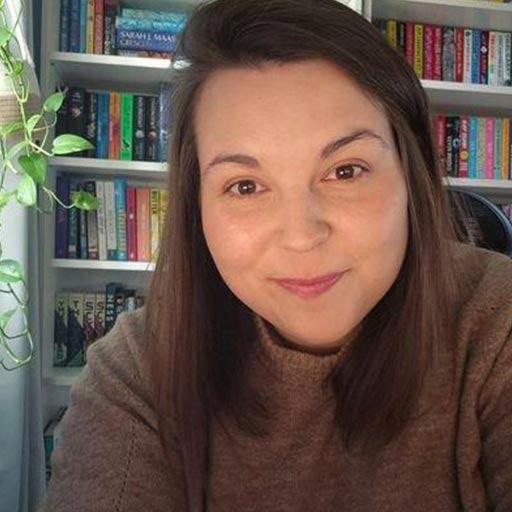
Dr Emily Corbett, Programme Convenor
Dr Emily Corbett
Dr Corbett is General Editor of The International Journal of Young Adult Literature. As Programme Convenor, she offers a strong grounding in academic and critical perspectives on children’s and young adult literature. Her work often engages with identity, readership, and contemporary publishing, providing students with analytical tools to interrogate the field’s evolving boundaries.
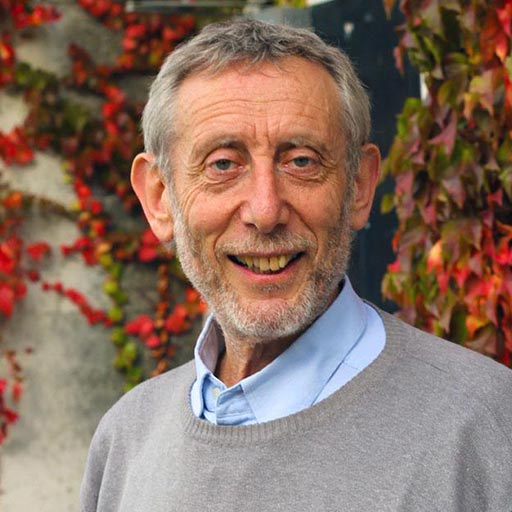
Michael Rosen, Professor, Children’s Literature
Professor Michael Rosen
Since the late 1960s, Michael Rosen has written extensively across books, articles, plays, and scripts, alongside performing poetry for audiences of all ages and broadcasting on literature-related topics across radio and television. He served as the UK Children’s Laureate from 2007 to 2009. Michael studied English at Wadham College, Oxford, before completing an MA at the University of Reading. After earning his PhD in 1997, he has taught children’s literature on MA programmes at universities in the UK and internationally.