
Creative Writing PGDip (Online)

Craft stories that shape the world
100% online
15 months (part-time)
120 credits
4 starts per year
Request more information
Complete the form below for detailed programme and pricing information, and to be contacted by phone and email.
Advance your creative writing with a focused PGDip
Goldsmiths, University of London’s online Postgraduate Diploma (PGDip) in Creative Writing is designed for aspiring and established writers who want to deepen their creative practice while earning a flexible postgraduate diploma. Through workshop-based learning across fiction, poetry, life writing, and the novel, you’ll develop a distinctive writing voice, receive expert feedback, and build a substantial portfolio of original work. Combining creative practice with publishing, professional development, and critical reflection, you’ll graduate with the confidence, industry insight, and portfolio to progress your writing career.
Programme benefits
- Established Goldsmiths reputation
- Practical writing advice combined with critical thinking
- Genre breadth with opportunities to specialise
- Literary community and practitioner expertise
- Future-focused professional development
Deepen your craft and broaden your opportunities
8 courses
120 credits
The programme is structured around a flexible carousel model rather than a rigid sequence. While most students complete the core, workshop‑focused modules first, the individual genre workshops may be taken in different orders depending on your point of entry. This flexibility is balanced by clear expectations for advanced, independent engagement, ensuring you develop and critically apply the foundational skills and contextual understanding required in each module.
View programme specificationCore Creative Writing PGDip modules

Career outlook
Develop the advanced writing, editing, and critical skills to pursue opportunities across various sectors including publishing, education, media, and the wider creative industries. With this career-focused programme aimed at professional development, you can learn the best pathways toward becoming a published writer, as well as developing a sustainable creative practice.
Explore potential career paths
Senior Programme Manager £58,285 per year1
Senior Creative Arts Administrator £61,398 per year2
Value of a diploma (PGDip)
A Postgraduate Diploma (PGDip) is a flexible alternative to a master’s if you want to advance your career in a shorter timeframe than a master’s degree. You’ll gain advanced, industry-relevant knowledge in a streamlined format, allowing you to focus on the skills that matter most. You’ll be able to:
- Study relevant modules only.
- Graduate with a Level 7 qualification.
- Reduce your overall tuition costs.
- Apply practical skills immediately.
- Progress to your MA when you’re ready.
PGDip Creative Writing programme outcomes
By the end of the Postgraduate Diploma in Creative Writing, you will be able to:
- Develop the confidence to experiment across fiction, poetry, life writing, and related forms, and maintain a coherent body of work in your chosen areas
- Establish the habit of drafting and redrafting across multiple projects and turn initial ideas into a more substantial portfolio of polished pieces
- Strengthen your close‑reading skills to recognise and apply advanced craft techniques to your own work and the writing of others
- Deepen your ability to analyse your creative decisions and situate your work within contemporary literary, cultural, and industry contexts
- Refine your critical commentary skills so you can clearly articulate, reflect on, and present the development of your creative projects at diploma level
“Doing the course helped me to work on story and writing as part of my TV career and I enjoy both working in teams and that my work is seen by a wide audience. I am in discussion with an agent about writing another book.”
–Grainne Lyons, MA Creative and Life Writing (Campus)
Entry criteria
Application Deadline 05/02/27
Start Date 01/03/27
This programme is for curious creatives from a broad range of related disciplines who share a passion for creative writing.
| Online application | Apply Now |
|---|---|
| Degree | Typically, applicants hold a 2:1 bachelor’s degree in literature, humanities, creative arts, or social sciences. Applicants with substantial professional experience may also be considered. |
| Language criteria | If English is not your first language, you will need to supply an up-to-date English language test certificate. We accept IELTS certificates with an overall score of 6.5, including a 6.5 in writing and no less than 6.0 in any band. Alternative test certificates are also accepted, and exemptions can be made. Please contact us to find out more. |
Tuition and funding
£10,400 Total cost
120 Total credits
The estimated total cost of this programme is £10,400 GBP for the full PGDip. You can pay in full or in instalments of £1,300 for each module. All costs are listed to help you make an informed decision.
Programme fees are reviewed annually and are subject to change each academic year. The fees listed above are for the academic year 2026-27.
Fees and funding
We are excited to be offering discounts. Review our tuition and funding pages for more information.
Funding optionsMeet your faculty
Our expert faculty offer extensive knowledge and diverse perspectives, bringing industry insights and real-world expertise directly into the classroom to enhance your learning experience.
- Academics with advanced qualifications and specialised expertise
- Real-world experience integrated into coursework and discussion
- A learning environment that blends academic rigour with structured support
- Smaller study groups that enable individual attention and feedback
- Ongoing mentorship and support at each stage of your studies at Goldsmiths
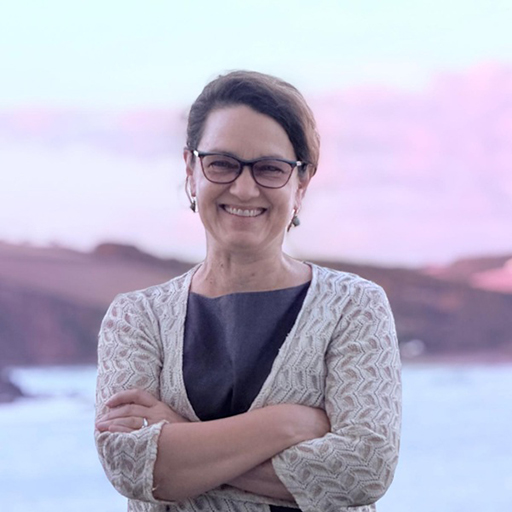
Dr Jocelyn Page, Programme Convenor, Creative Writing
Dr Jocelyn Page
Jocelyn Page has published in various journals including The Spectator, Poetry Ireland Review, Poetry Salzburg, South Carolina Review and Poetry Review. Her debut pamphlet, smithereens, was published in 2010 by tall lighthouse press and her 2016 You’ve Got to Wait Till the Man You Trust Says Go was the winner of the Goldsmiths’ Writer Centre’s Poetry Pamphlet award. She is a Lecturer in English and Creative Writing at Goldsmiths College and the University of London Worldwide. She has held residencies at London’s The Reach Climbing Centre and the 999 Club homeless centre and currently serves as a Creative Consultant for Greenpeace International. Jocelyn is the co-chair of the National Association of Writers in Education and a Fellow of Higher Education Association.
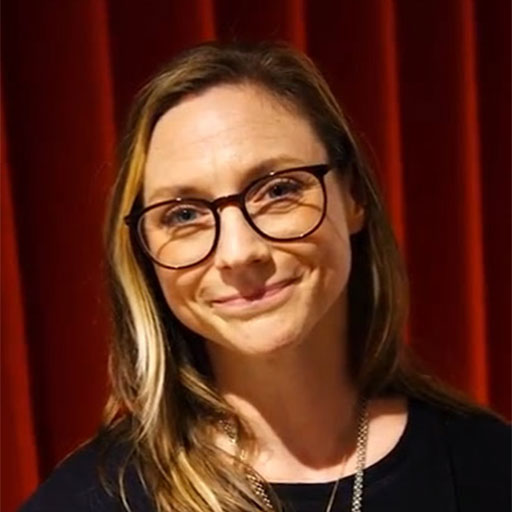
Amy Sackville, Senior Lecturer, Creative Writing
Amy Sackville
Amy Sackville is a Senior Lecturer in Creative Writing. She writes novels, short stories and occasional personal essays and reviews, with interests in historical fiction, experimental form, ekphrasis, and the intersections of life writing, biography and (auto)fiction. Her most recent book, Painter to the King (Granta, 2018), is about the painter Diego Velázquez and his life and work in the court of Philip IV of Spain. She has written for The Guardian, The Independent, Literary Hub, Fictionable, and others. In 2018, she was elected a Fellow of the Royal Society of Literature. She completed the MA in Creative and Life Writing at Goldsmiths in 2008.

Dr Livia Franchini, Lecturer in Creative Writing
Dr Livia Franchini
Livia Franchini is a writer and translator from Tuscany, Italy. She is the author of two novels, Shelf Life and High Tide, and the co-editor of Too Little, Too Hard, a collection of essays on writing, work and value. Her most recent English-language translation is Lorenza Mazzetti’s The Sky Is Falling. Livia is Lecturer in Creative Writing at Goldsmiths, where she also coordinates the Goldsmiths Prize. She lives in south east London with her family.
Related programmes
Sources
- ERI Economic Research Institute (2026). Program Manager in the United Kingdom (2026). [online] SalaryExpert. Available at: https://www.salaryexpert.com/salary/job/program-manager/united-kingdom [Accessed 02 July 2026].
- ERI Economic Research Institute (2026). Creative Arts Administrator in the United Kingdom (2026). [online] SalaryExpert. Available at: https://www.salaryexpert.com/salary/job/creative-arts-administrator/united-kingdom [Accessed 02 July 2026].