
Wonder: The life skill we need more of
| 6 Min Read
When was the last time you gave yourself time to wonder?
Not to find an answer. Not to solve something. And not because there was a deadline at the end of it.
Adult life doesn’t always leave much room for that kind of thinking. We work to deadlines, move from one task to the next and get used to measuring our time by what comes out of it. Wonder asks something quite different of us. To stop. Pay attention. Follow an idea without knowing where it’ll lead.
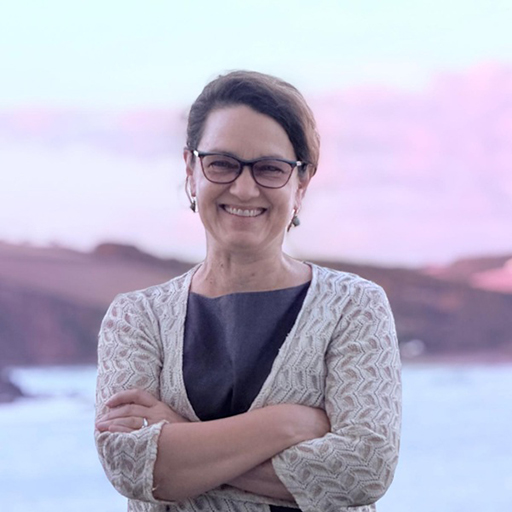
With Wonder as the theme for National Poetry Day 2026, we caught up with Dr Jocelyn Page, Programme Convenor for the online MA Creative Writing at Goldsmiths, for a wide-ranging conversation about wonder, writing and whether we’ve tucked them too far away to make space for other priorities.
Jocelyn is a poet and lecturer in English and Creative Writing at Goldsmiths, as well as co-chair of the National Association of Writers in Education.
We don’t lose wonder. We stop using it.
Jocelyn sees curiosity and wonder as closely related, but not quite the same.
Curiosity might send you looking for an answer. You research, read and try to understand something better. Wonder has more room to roam. It brings imagination into the process.
“Wonder, I think, is a skill that we’re born with. It comes from childhood.”
Children are particularly good at it. They can become absorbed in something without needing to know what they’re going to get from it. An observation becomes a question. The question becomes an idea. The idea goes somewhere else entirely.
Then adulthood intervenes.
There are obvious pressures. Work, responsibilities, making a living and simply finding the time. However, Jocelyn thinks we are also trained to become productive. Our time becomes accountable to other people and useful outcomes. Slowly, that natural inclination to let the mind wander can get pushed aside.
As Jocelyn puts it, “wonder, doesn’t need or want conformity.” As adults, making space to simply pause and wonder can easily fall away. And when a skill isn’t valued or used, it can atrophy.
Making time for something that may lead nowhere
So, can we get it back?
For Jocelyn, part of the answer is surprisingly simple. Give it time.
That doesn’t mean committing to a rigid writing routine. Her own creative practice has changed around raising children, working full time and everything else life brings with it. An idea might appear while she’s running. Something she sees in a tree might connect with a thought she’s been carrying around. She might write it down when she gets home.
It might become something. It might not.
We’re used to asking what our time will produce. Jocelyn suggests creative practice sometimes requires us to stop asking.
“I think you just need to tell yourself that the process is the valuable thing in and of itself.”
An hour spent writing doesn’t need to end with something publishable. A disrupted routine doesn’t mean the practice has failed. Not every idea needs to go somewhere.
Sometimes paying attention to it is enough.
For Jocelyn, that isn’t limited to writing either. It could be photography, art or another creative pursuit. The practice may change, but the important part is continuing to give that part of yourself some room.
Sometimes the form finds the idea
Wonder doesn’t always arrive neatly packaged as a poem or story.
Sometimes an idea comes first and you have to work out what form it wants to take. It might become poetry, life writing or, in Jocelyn’s own practice, stitching.
Other times, the process works the other way around.
Pick up a pen. ‘Decide to write what you see using only one-syllable words’. Pick up a needle and work with pink thread. The material or constraint itself can draw out an idea that was already sitting somewhere in your mind.
Poetry can work like that too.
A phrase might arrive because of its rhythm or a particular combination of sounds before you fully understand what you want it to say. Poetry gives writers tools such as rhythm, rhyme and repetition to work with. Trying too quickly to make the phrase more easily understood or more suitable for a particular audience can sometimes change the thing that made it interesting in the first place.
The medium can change. The starting point can change. What matters is being alert enough to notice what is coming your way, then giving yourself permission to follow it.
“I think wonder is in danger of becoming a luxury – one that humanity can’t do without”
Why make space for Creative Writing now?
That tension between wonder and productivity also helps explain why Jocelyn believes there is a place for a Creative Writing MA today.
Goldsmiths’ online MA gives students room to explore poetry, the short story, the novel and life writing before deciding where they want to concentrate their practice.
That breadth is deliberate. You don’t necessarily know in advance which form will give your ideas their best expression.
Jocelyn knows that first-hand. Around 20 years ago, she joined the Goldsmiths campus MA expecting to write prose. She came out the other side a poet.
The online programme builds on the experience of that established campus course, while making it available to a wider cohort. Jocelyn says its purpose goes beyond developing individual pieces of writing.
There’s a focus on developing a creative life.
Students learn how to cultivate a regular practice, make room for creativity alongside everything else and develop what Jocelyn describes as a creative “muscle” that can continue working long after the MA finishes.
It’s also where Creative Writing fits into Goldsmiths’ wider #SkillsForTomorrow conversation. In a world increasingly geared towards speed and efficiency, the ability to slow down, pay attention, develop an idea and find your own way of expressing it has a different kind of value.
“The course allows for students to try to find the best home for their wonder.”
When that wonder becomes work you’re ready to share, the programme gets practical too. A dedicated publication module looks at what it takes to send work out into the world and gives students the tools and resources to begin doing it.
Give yourself permission to create without immediately demanding an outcome. Then develop the craft and knowledge to recognise when something is ready to go further.
Stop everything. And write.
On 1 October, Jocelyn continued this conversation as part of Goldsmiths Online’s National Poetry Day webinar, The wonder of words: How poetry helps us see the world differently.
The hour wasn’t spent simply talking about poetry.
Attendees spent time listening to poetry by Michael Rosen before Jocelyn lead a free-writing exercise. Participants had an opportunity to do the thing we’ve been talking about all along and share their own work.
Watch the recording and take part for yourself. Stop. Make some space. Put words on the page without knowing exactly where they’re going.
Or, in Jocelyn’s words, give yourself permission to “stop everything and just write”.
Perhaps that’s one skill for tomorrow worth making time for today.
#SkillsForTomorrow. Shaped @Goldsmiths.